
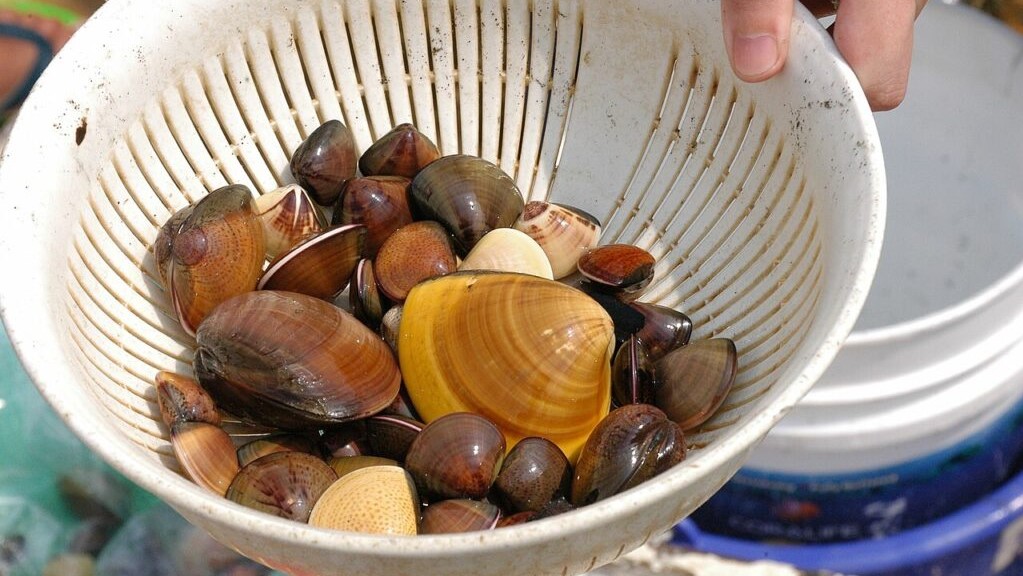
Taiwan clam (scientific name: Meretrix taiwanica), also known as ark shell, powder chord, is a kind of clam in the genus Meretrix. It is mainly distributed in the western coast of Taiwan and the coast from southern China to northern Vietnam. This species is native to Taiwan and the annual production of this species is more than 40,000 tons.
Discovery Process
In 2017, Chinese scientists discovered that the Chinese clam (M. petechialis) has genetically isolated north and south branches, with the distributional boundary in the Fujian area.
In 2019, Taiwanese fishermen reported a year-on-year decline in clam catches in the Danshuei River, with occasional violent deaths. Sheng-Dai Hsiao and Shi-Chang Chuang, researchers from the Aquatic Products Laboratory of the Council of Agriculture, Executive Yuan, have further initiated the investigation of the clam's habitat and restoration work. In the course of the investigation, molecular biotechnological genetic characterization[3] revealed that the clam cultured in Taiwan is not the previously recognized M. lusoria, but a separate proto-species. The new species is the same population as the previously discovered southern branch.
The discovery was officially published in Molluscan Research in March 2023, and the new species was named "M. taiwanica".
Clam
The clam is a bivalve mollusc belonging to the clam family. Clams are an important economic shellfish and are cultured all over the world. Clam culture is generally divided into two ways: one is beach culture and the other is pond culture.
Beach culture is a traditional culture method, where ditches are dug on the intertidal beach and clam fry are placed into the ditches, and the clams grow by sucking food from the mud. The advantage of mudflat culture is low cost, but the disadvantage is low yield.
Pond culture is a newer form of culture, in which seawater is injected into the pond and the clam fry are placed into the pond, where the clams grow by feeding on the water in the pond. The advantage of pond culture is high production, but the disadvantage is high cost.
Clam Farming
- Water quality: Clams have high requirements for water quality, which must be clear and unpolluted.
- Temperature: The ideal temperature for clams to grow is 20-30℃. 3.
- Food: Clams are filter feeders and need to eat a lot of plankton.
- Disease Control: Clams are susceptible to diseases and farmers need to pay attention to disease control.
Clam farming is an important industry and is of great significance to the development of the fisheries industry. Clam farming can provide fishermen with income and consumers with safe and healthy seafood.
The difference between wild clams and cultured clams
- Environment: Wild clams grow in a natural environment and are affected by a variety of factors, including water quality, temperature, and food. Cultured clams grow in artificial ponds, where water quality, temperature and food are controlled by the farmers.
- Meat quality: The meat of wild clams is generally fresher and more flexible than that of cultured clams. This is because wild clams can move freely in their natural environment and eat a variety of food, while cultured clams can only eat a limited amount of food in artificial ponds.
- Price: Wild clams are generally more expensive than cultured clams. This is due to the fact that wild clams have a lower yield and are more expensive to catch.
In general, wild clams and cultured clams have their own advantages and disadvantages. Wild clams are more flavorful and more expensive, but they are less abundant and more expensive to catch. Cultivated clams are also more flavorful and less expensive, but their meat quality is not as good as that of wild clams.
Factors affecting the yield of wild clams
- Water Quality: Clams have very high water quality requirements and need to live in clear, unpolluted seawater. If the water is polluted, the clams will grow slowly or even die.
- Temperature: The ideal temperature for clams to grow is 20-30°C. If the temperature is too high or too low, clams will grow slowly or even die. If the temperature is too high or too low, clams will grow slowly.
- Food: Clams are filter feeders and need to eat a lot of plankton. If there is not enough food, clams will grow slowly.
- Disease: Clams are susceptible to diseases such as red tide and white spot disease. Without proper disease control, clams will die on a large scale.
- Human fishing: Overfishing will lead to a decrease in the yield of wild clams.
Protecting Wild Clam Resources
- Enhance the protection of water quality and reduce pollution.
- Reasonably control the amount of fishing and avoid overfishing.
- Promote artificial culture to increase the supply of clams.
- Raise people's awareness of the protection of wild clam resources.